
Best Oscillating Sanders Compared: Which One Is Worth It?
Sanding curved edges, contours, and detailed wood surfaces can be difficult with standard sanders. Flat sanders work well on large surfaces, but when it comes to tight curves or intricate shapes, they often fall short. That’s where an oscillating sander becomes a useful tool.
This guide to the best oscillating sander focuses on tools designed to handle detailed sanding tasks, especially on curved or irregular surfaces. These sanders are commonly used in woodworking projects such as shaping edges, smoothing contours, and finishing detailed parts.
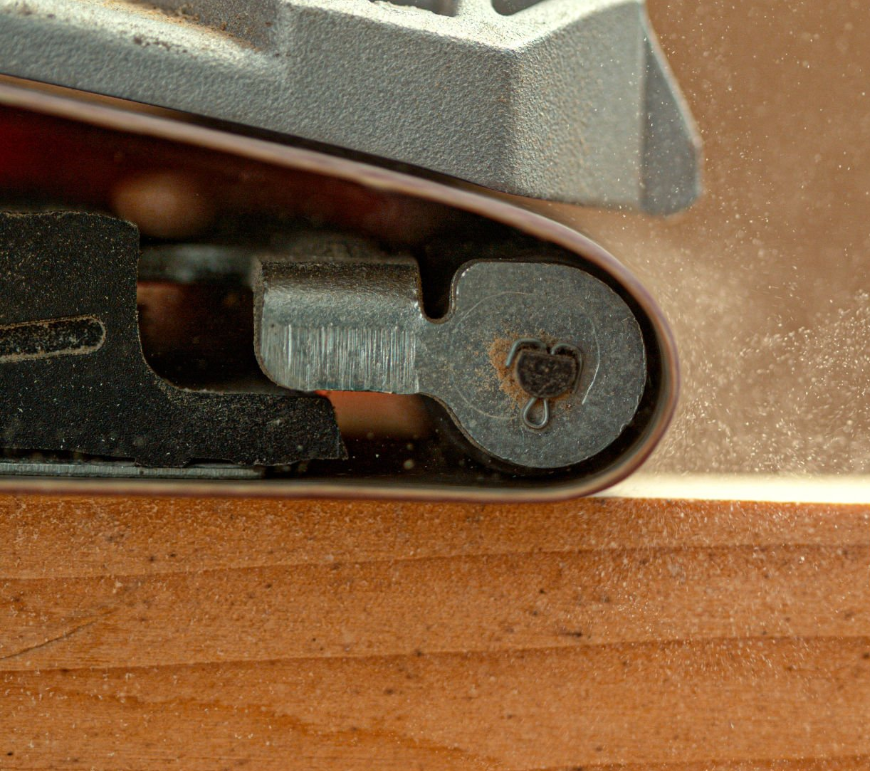
An oscillating sander works by spinning a sanding drum while also moving it up and down in an oscillating motion. This helps reduce heat buildup, minimize sanding marks, and extend the life of sanding sleeves.
Many oscillating sanders come with interchangeable drum sizes, allowing you to sand both small and larger curves. Some models also include flat sanding surfaces, making them more versatile for different types of projects.
In the sections below, we’ll go over what to look for when choosing an oscillating sander and how different models can suit different types of woodworking tasks.
What to Look for in the Best Oscillating Sander
Not all oscillating sanders offer the same level of performance or versatility. When choosing one, a few key factors can make a noticeable difference.
Drum sizes and versatility
Most oscillating sanders include multiple drum sizes. Having a range of sizes allows you to sand different curves and shapes more effectively.
Oscillation speed
The up-and-down oscillating motion helps reduce heat and sanding marks. A consistent oscillation speed contributes to smoother finishes.
Dust collection
Sanding creates a lot of dust, especially in woodworking projects. Models with built-in dust ports or collection systems help keep your workspace cleaner.
Stability
A stable base helps keep the sander steady during operation, which improves accuracy and safety when working on detailed pieces.
Ease of setup
Quick sleeve changes and simple adjustments can save time, especially if you switch between different drum sizes frequently.
The Top 5 Best Oscillating Sanders in 2026
Oscillating Sander #1:
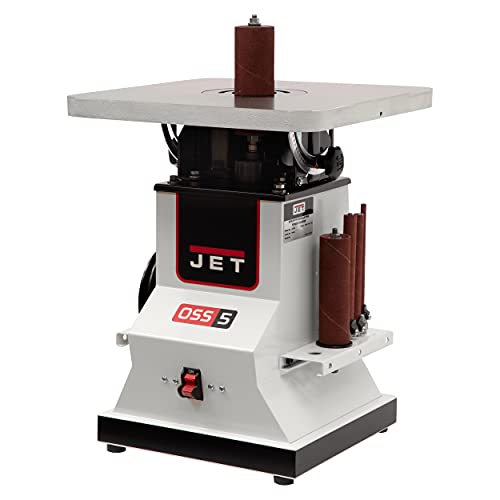

The JET JBOS-5 Benchtop Oscillating Spindle Sander is designed for detailed woodworking tasks where smooth, consistent sanding is important. With a 1/2 HP motor and a solid benchtop design, this machine is built to handle shaping, smoothing, and finishing curved edges and contours.
One of the key features of this model is its oscillating spindle system, which uses a worm and gear mechanism combined with precision ball bearings. This setup helps maintain consistent up-and-down motion during sanding, which can reduce heat buildup and improve surface finish.
The unit includes a cast iron table (14-1/2″ x 14-1/2″) that provides stability while working. The table can also tilt up to 45 degrees, allowing for bevel sanding on angled workpieces.
To support different sanding tasks, the sander comes with multiple spindle sizes—including 1/4″, 1/2″, 5/8″, 1-1/2″, and 2″ assemblies—each paired with sanding sleeves. This range allows users to sand both tight curves and larger rounded edges.
The machine also includes four table inserts designed to fit different spindle sizes, helping prevent dust and debris from entering the motor area. Built-in storage racks keep spindles and inserts organized and within reach.
The oscillating action has a 1-inch stroke, which helps reduce friction heat and can extend the life of sanding sleeves during use.
Who it’s best for:
This oscillating sander is suited for woodworkers, DIY users, and hobbyists who need a stable benchtop machine for sanding curves, edges, and detailed wood components.
Notable features:
- 1/2 HP motor – consistent power
- 1″ oscillation stroke – reduced heat buildup
- Cast iron table – stable work surface
- 45° tilting table – bevel sanding
- Multiple spindle sizes – 1/4″ to 2″
- Built-in storage – organized accessories
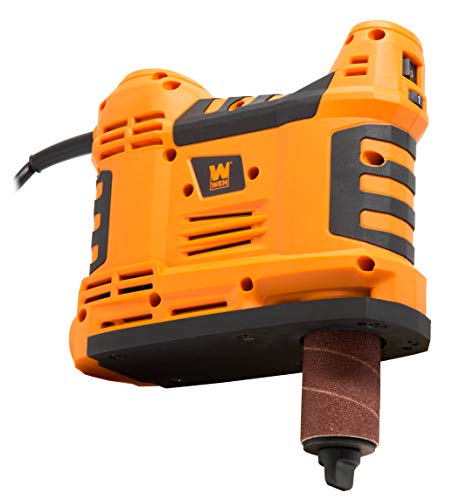
The WEN HA5932 Portable Oscillating Spindle Sander offers a different approach compared to traditional benchtop models. Instead of being fixed in one place, this tool is designed to be lightweight and portable, making it easier to sand curves and edges directly on the workpiece, even in tighter or hard-to-reach areas.
One of its more flexible features is the ability to convert from handheld to benchtop use. With the included clamps and mounting hardware, you can secure it to a workbench and use it like a stationary spindle sander when needed. This dual-use design adds versatility for different types of sanding tasks.
The sander is powered by a 5-amp variable speed motor, allowing adjustments between 1800 and 3200 rotations per minute and 50 to 90 oscillations per minute. This helps tailor the sanding speed depending on the material or level of detail required. The oscillation stroke measures 1/4 inch, supporting smoother sanding performance.
The tool includes four spindle sizes (1/2″, 3/4″, 1″, and 1-1/2″), along with sanding sleeves and rubber drums, allowing it to handle a range of curved surfaces. Additional accessories such as an adjustable guide plate and a non-marring mounting pad help improve control during sanding.
For dust management, the unit features a 1-1/2 inch dust port, which can help reduce dust buildup in the workspace when connected to a dust collection system.
Who it’s best for:
This model is well suited for DIY users and hobbyists who want a versatile oscillating sander that can be used both handheld and mounted, especially for smaller projects or detailed sanding tasks.
Notable features:
Oscillating Sander #3:
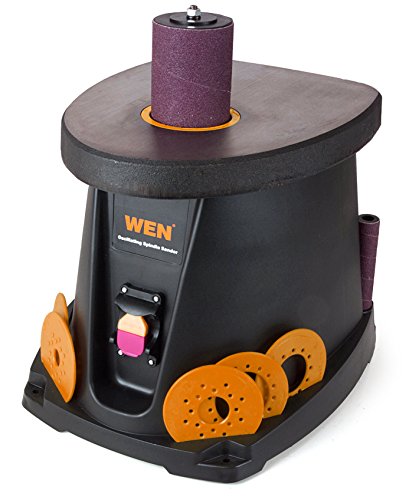
The WEN 6510T Oscillating Spindle Sander is a benchtop machine designed for woodworking tasks that require sanding curved edges and detailed shapes. With a 3.5-amp motor (1/2 HP), it provides steady performance for smoothing contours and refining edges on various wood projects.
This model operates at 2000 RPM with 58 oscillations per minute, combining rotational movement with oscillation to help reduce heat buildup and improve sanding results. This motion can also help extend the life of sanding sleeves during use.
The sander includes onboard storage for accessories, allowing sanding components and attachments to be kept organized and within easy reach. This can be useful when switching between different spindle sizes or sanding sleeves during a project.
For dust management, the unit features a built-in dust collection port, which allows connection to a dust extractor. This helps reduce dust buildup in the workspace and can improve visibility while sanding.
With its benchtop design and larger footprint, the WEN 6510T provides a stable platform for sanding operations, making it suitable for consistent and controlled work on detailed pieces.
Who it’s best for:
This oscillating sander is suitable for woodworkers, DIY users, and hobbyists who want a stable benchtop machine for sanding curves, edges, and detailed wood components.
Notable features:
- 1/2 HP motor – 3.5 amp power
- 2000 RPM speed – consistent rotation
- 58 OPM – oscillating motion
- Onboard storage – accessory organization
- Dust collection port – cleaner workspace
- Benchtop design – stable operation
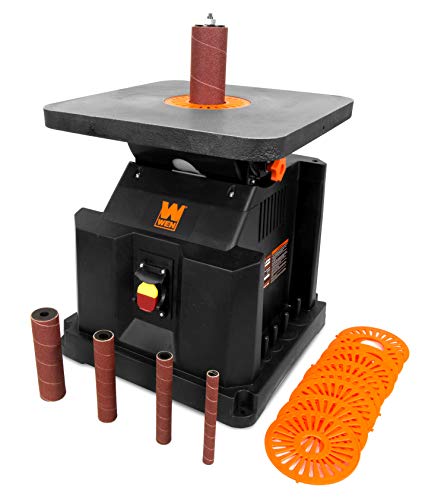
The WEN AT6535 Oscillating Spindle Sander is a benchtop sanding tool designed for shaping curves, smoothing edges, and handling angled sanding tasks. With a 3.5-amp motor, it delivers steady performance for woodworking projects that require consistent results.
This model operates at 2000 RPM with 58 oscillations per minute, combined with a 5/8-inch oscillation stroke. This motion helps reduce friction and sanding marks while improving overall surface finish.
One of the standout features of this sander is its large 14-1/2″ x 14-1/2″ table, which provides a stable workspace. The table can also tilt up to 45 degrees, allowing for bevel sanding on angled workpieces, which can be useful for more complex woodworking tasks.
The unit includes five sanding sleeve sizes (1/2″, 3/4″, 1″, 1-1/2″, and 2″), making it adaptable for both tight curves and larger rounded edges. This flexibility allows the sander to handle a variety of shapes and project types.
To keep everything organized, the sander features onboard storage for sanding sleeves and accessories, making it easier to switch between different setups during a project.
Who it’s best for:
This oscillating sander is suitable for woodworkers and DIY users who want a benchtop machine with a large tilting table for sanding curves and angled surfaces.
Notable features:
Oscillating Sander #5:
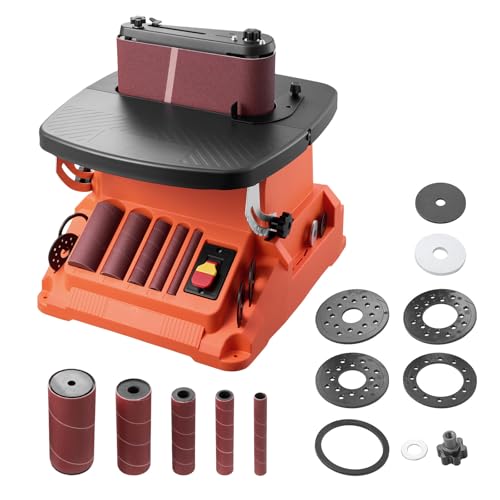
The VEVOR Oscillating Belt and Spindle Sander is a versatile benchtop machine designed to handle both curved and flat sanding tasks. Unlike standard spindle-only models, this unit combines a spindle sander and a belt sander, making it suitable for a wider range of woodworking applications.
The machine operates at 2400 RPM and includes a 5/8-inch oscillation stroke, helping reduce heat buildup and improve sanding consistency. This combination of speed and oscillation allows for smoother finishes on both contoured and flat surfaces.
One of the key advantages of this model is its dual sanding capability. It comes with a 24″ x 3.86″ sanding belt for flat surfaces, along with five spindle sleeve sizes (1/2″ to 2″) for curved edges and detailed work. This flexibility makes it useful for projects such as furniture finishing, shaping edges, and general woodworking tasks.
The unit features a tilting worktable adjustable from 0 to 45 degrees, allowing for angled sanding when working on bevels or sloped surfaces. This can be helpful when creating more complex shapes or refining angled edges.
For dust management, the sander includes a dust port compatible with vacuum hoses, helping reduce dust buildup and keeping the workspace cleaner during operation.
To keep everything organized, the machine includes integrated storage slots for sanding sleeves and table inserts, making it easier to switch between setups without losing accessories.
Who it’s best for:
This sander is suitable for woodworkers, DIY users, and hobbyists who want a multi-functional oscillating sander capable of handling both flat and curved sanding tasks.
Notable features:
Quick Comparison: Which Is the Best Oscillating Sander?
When choosing the best oscillating sander, the biggest differences come down to power, versatility, and design. Some models focus on stability and precision, while others add flexibility or multi-function sanding capabilities.
Best Overall Benchtop Oscillating Sander
The JET JBOS-5 stands out for its solid construction and consistent oscillation system. With a cast iron table, multiple spindle sizes, and a reliable mechanism, it’s well suited for users who want a stable and precise benchtop sander.
Best Budget-Friendly Benchtop Option
The WEN 6510T offers a simpler setup with a 3.5-amp motor and dust collection port, making it a practical choice for everyday woodworking projects without a more complex feature set.
Best for Angled and Bevel Sanding
The WEN AT6535 provides a large tilting table (up to 45°) and multiple sleeve sizes, making it a good option for sanding angled edges and more complex shapes.
Most Versatile (Belt + Spindle)
The VEVOR Oscillating Belt and Spindle Sander adds a belt sanding function, allowing it to handle both flat surfaces and curves. This makes it one of the more flexible options for mixed woodworking tasks.
Best Portable and Flexible Option
The WEN HA5932 Portable Sander is unique with its handheld and benchtop conversion design, making it useful for smaller projects and sanding in tight spaces.
| Model | Motor / Power | Speed | Special Feature | Best For |
|---|---|---|---|---|
| JET JBOS-5 | 1/2 HP | — | Cast iron table, 45° tilt | Precision woodworking |
| WEN HA5932 | 5 Amp | 1800–3200 RPM | Portable & convertible | Tight spaces & flexibility |
| WEN 6510T | 3.5 Amp | 2000 RPM | Dust port, onboard storage | Budget benchtop use |
| WEN AT6535 | 3.5 Amp | 2000 RPM | Large tilting table | Bevel sanding |
| VEVOR Belt/Spindle | 4 Amp | 2400 RPM | Belt + spindle combo | Versatile sanding tasks |
Conclusion
The best oscillating sander depends on the type of projects you plan to work on.
For consistent, detailed woodworking, a solid benchtop model with multiple spindle sizes is usually the most practical choice. If you need more flexibility, a portable or dual-function sander can help handle a wider variety of tasks.
Think about whether you’ll mostly sand curves, flat surfaces, or angled edges. A tool that matches your workflow and provides stable performance, smooth oscillation, and easy setup will make your sanding projects more efficient and consistent.
If we had to pick one from this group, we’d go with the JET Benchtop Oscillating Spindle Sander.
And what will be the best oscillating sander in 2027? If you are interested in this subject subscribe us and share your opinion in a comment. Thank you!