
Best Sanding Tools for Home Projects: A Practical Buyer’s Guide
If you’ve ever tried sanding a surface by hand and ended up with sore arms, uneven results, or dust everywhere, you already know why choosing the best sanding tools matters. Sanding is one of those steps that looks simple on paper, but in real life it can make or break a DIY project. Whether you’re refinishing old furniture, smoothing drywall patches, or prepping wood for paint, the right tool can save you time, effort, and frustration.
This guide is for homeowners, casual DIYers, and weekend project fans who want clean, predictable results without turning sanding into a chore. You don’t need professional-grade equipment or deep technical knowledge. What you do need is a clear understanding of which sanding tools make sense for different tasks, and what features actually matter in everyday use.
Instead of hype or sales talk, we’ll focus on practical differences, real-world use cases, and honest comparisons. The goal is simple: help you figure out which sanding tools fit your projects, your space, and your comfort level—so you can work smarter, not harder.
How to Choose the Best Sanding Tools
Before looking at specific tools, it helps to understand what separates a good sanding tool from one that just looks good on the box. Not every project needs the same approach, and the “best” option often depends on how and where you plan to use it.
One of the first things to consider is the type of surface you’ll be sanding. Flat surfaces like tabletops or shelves benefit from different tools than corners, edges, or curved shapes. Some sanding tools are designed for control and precision, while others focus on covering larger areas quickly.
Another important factor is ease of use. For DIY projects, comfort matters. Tools that are awkward to hold, hard to control, or tiring to use can slow you down and lead to uneven results. Weight, grip design, and vibration control all play a role here, even if you’re only working for short sessions.
Dust management is also worth thinking about. Sanding creates fine dust that can quickly spread through a room. Tools with built-in dust collection features can make cleanup easier and help keep your workspace more comfortable.
Finally, think about flexibility. If you plan to tackle different kinds of projects, a sanding tool that works with various sanding sheets or attachments can be more practical than a highly specialized option.
Keeping these points in mind will make it much easier to compare tools and choose something that fits your real needs—not just the project you’re working on today.

The Top 5 Best Sanding Tools in 2026
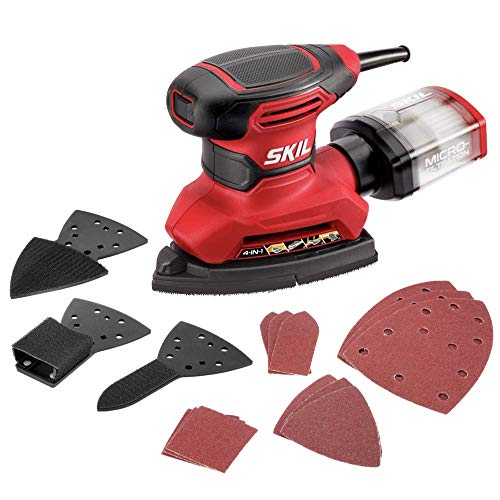
When projects involve tight corners, edges, or awkward surface shapes, a traditional sander can quickly feel limiting. This is where the SKIL Corded Multi-Function Detail Sander fits in naturally. It’s designed for situations where control and adaptability matter more than raw size, making it a practical option for everyday home projects.
This model uses a corded electric setup with a 1.2-amp motor, which means consistent power without worrying about runtime. The sanding motion is fast and steady, helping create smooth finishes across different materials and surfaces. What really defines this tool, though, is its multi-function approach. The included detail attachments allow the sander to shift between larger surface work, corners, edges, and contoured areas without complicated adjustments or extra tools.
Dust is another area where this sander keeps things manageable. You can rely on the built-in micro-filter dust box for quick jobs, or connect it to a vacuum through the dedicated dust port when working indoors or sanding for longer periods. This flexibility makes cleanup easier and helps keep your workspace more comfortable.
Comfort hasn’t been overlooked either. The ergonomic design and soft rubber grip make the tool easier to control, while the reduced vibration helps limit hand fatigue during extended use. Small touches, like the dust-sealed on/off switch and hook-and-loop sanding sheet system, make day-to-day operation straightforward and frustration-free.
Who it’s best for:
DIYers and homeowners who work on detailed sanding tasks, small furniture projects, trim, edges, and hard-to-reach areas where precision and versatility are more important than covering large flat surfaces quickly.
Notable features:

For flat surfaces and controlled, even sanding, a classic palm sander still earns its place among the best sanding tools for home projects. The DEWALT DWE6411K follows that traditional approach, focusing on stability, surface contact, and predictable results rather than versatility or attachments.
This sander runs on a corded electric design with a 2.3-amp motor, delivering a steady sanding motion suitable for smoothing wood, prepping surfaces for paint, or light refinishing work. The 1/4 sheet format makes it easy to use standard sandpaper, which can be helpful if you prefer cutting sheets to size instead of relying on proprietary sanding pads.
One of the noticeable design choices here is the reduced overall height. Sitting closer to the work surface gives better control and helps maintain a flatter sanding plane, especially on tabletops, shelves, or doors. The foam pad supports even pressure distribution, which can reduce the risk of uneven spots when sanding larger flat areas.
Comfort and vibration control are clearly part of the design as well. The rubber overmold grip provides a secure, comfortable hold, while the separate counterweight helps reduce vibration during use. Dust management is handled through a locking dust-port system, allowing direct connection to compatible dust collectors or vacuums, with additional options for standard hose sizes.
Who it’s best for:
Homeowners and DIYers who frequently sand flat surfaces and want consistent, controlled results using standard sandpaper sheets, especially for furniture prep and general surface smoothing.
Notable features:

If your sanding projects focus on smooth, controlled finishing rather than aggressive material removal, the Makita BO4556K 1/4 Sheet Finishing Sander fits that role well. It sticks to a simple, proven design and puts most of the emphasis on control, comfort, and consistency—qualities many DIYers appreciate when working on furniture or trim.
This corded sander operates at a steady 14,000 orbits per minute, which helps create an even finish without feeling jumpy or hard to manage. The internal construction is designed to reduce both vibration and noise, making it easier to work for longer stretches without the tool becoming distracting or tiring.
Makita has clearly focused on ergonomics here. The contoured, rubberized palm grip sits naturally in the hand, giving you a secure hold and better feedback from the surface you’re sanding. That makes it easier to maintain consistent pressure, especially when working on flat panels, cabinet doors, or detailed finishing tasks.
Paper changes are kept simple thanks to a large clamping lever, which allows for quick installation and removal of sanding sheets. For dust control, the sander uses a through-the-pad collection system paired with a built-in dust port. This setup helps move dust away from the sanding surface and can be connected directly to a compatible Makita vacuum for a cleaner workspace.
Who it’s best for:
DIYers and homeowners looking for a reliable finishing sander for flat surfaces, furniture projects, and general surface prep where smooth, even results matter more than speed.
Notable features:
-
Sanding speed – 14,000 OPM
-
Motor draw – 2-amp corded electric
-
Grip design – contoured rubberized palm
-
Paper change – large clamping lever
-
Vibration control – precision bearing system
-
Dust collection – through-the-pad port

For projects where control and surface consistency matter more than speed, the BOSCH GSS20-40 Orbital Finishing Sander is built around precision. Its sanding motion is tighter and more controlled than many basic palm sanders, which can make a noticeable difference during finishing work.
This corded model runs on a 2.0-amp motor and operates at 12,000 oscillations per minute. Instead of aggressive movement, it focuses on smooth, even sanding—especially useful when preparing wood for paint, stain, or final finishing coats. The precision-machined aluminum sanding plate plays a big role here, helping maintain a flat sanding surface while also adding durability over time.
Dust control is handled through an integrated system that pulls dust directly through the sanding pad. The included micro-filter dust canister captures a wide range of particle sizes and uses a screw-off cap, making it easy to empty between sessions. This setup works well for indoor projects where keeping dust contained matters.
Comfort and handling are clearly part of the design. The soft-grip surface and low-vibration engineering help maintain steady control, even during longer sanding sessions. The clamping and pad system supports multiple sanding sheet types, including stick-on paper, and allows for flush sanding along edges—adding flexibility without complicating the tool.
Who it’s best for:
DIYers and homeowners focused on finishing and surface prep tasks who want controlled sanding, reliable dust collection, and steady handling for detailed woodworking and home improvement projects.
Notable features:

When a project involves corners, edges, or narrow spaces where larger sanders struggle, a compact detail sander can be the most practical solution. The CRAFTSMAN CMEW210 Detail Mouse Sander is built specifically for that kind of precision work, offering focused control in a small, easy-to-handle format.
This corded sander delivers a sanding motion of 14,000 orbits per minute, which helps keep sanding consistent across a range of light-duty tasks. It’s well suited for woodworking details, touch-ups, and surface prep in areas that are difficult to reach with traditional palm or finishing sanders. The included detail attachment expands its reach even further, making it easier to work in tight corners and along edges.
Comfort and control are central to the design. The rubber grip improves handling and reduces slipping, especially during more detailed work where steady movement matters. A dust-sealed switch helps protect the tool during use, supporting reliable operation in dusty environments without adding complexity.
Dust management is handled through an included dust bag, which offers a simple way to collect sanding debris during smaller projects. The sander is also Versatrack compatible, using a hook-style system rather than clips, which can be useful for organized storage in a home workshop or garage.
Who it’s best for:
DIYers and homeowners who need a compact sander for detail work, corners, and small woodworking projects where precision and control are more important than sanding large flat surfaces quickly.
Notable features:
Quick Comparison: Choosing the Best Sanding Tools for Your Needs
After looking at these sanding tools side by side, a few clear use cases start to emerge. While all of them belong in the broader “best sanding tools” category, they serve slightly different purposes depending on how and where you plan to use them.
For beginners and general home use, tools like the DEWALT DWE6411K and the Makita BO4556K stand out as straightforward, predictable options. Their 1/4-sheet design works well on flat surfaces, they’re easy to control, and they don’t require learning curves or special accessories. If your projects include furniture prep, shelves, or basic surface smoothing, these fit naturally into a home workshop.
If detail work and tight spaces are a priority, the SKIL Multi-Function Detail Sander and the CRAFTSMAN Detail Mouse Sander are better suited. The SKIL model offers more flexibility with multiple attachments, making it useful for varied shapes and contours. The CRAFTSMAN focuses on compact precision, ideal for corners, edges, and small touch-up tasks.
For controlled finishing and woodworking, the BOSCH GSS20-40 leans toward precision. Its tighter orbital motion and aluminum sanding plate make it a solid choice when surface consistency and finish quality matter more than speed.
| Tool | Best for | Sanding style | Power source | Dust handling | Ease of use |
|---|---|---|---|---|---|
| SKIL Detail Sander | Corners & contours | Detail orbital | Corded | Dust box / vacuum | Easy |
| DEWALT Palm Sander | Flat surfaces | 1/4-sheet orbital | Corded | Vacuum port | Very easy |
| Makita BO4556K | Finish sanding | 1/4-sheet orbital | Corded | Through-pad port | Easy |
| Bosch GSS20-40 | Precise finishing | Tight orbital | Corded | Micro-filter canister | Moderate |
| CRAFTSMAN Detail Sander | Tight spaces | Detail orbital | Corded | Dust bag | Very easy |
Conclusion
Choosing among the best sanding tools isn’t about finding one “perfect” option—it’s about matching the tool to the kind of work you actually do. Flat surfaces, detailed corners, finishing work, and general prep all benefit from slightly different designs.
If you mostly handle everyday home projects, a reliable palm or finishing sander can cover a lot of ground. For more intricate work, a dedicated detail sander can save time and frustration. Think about your typical projects, the surfaces you work on most, and how much control you want during sanding.
With those factors in mind, it becomes much easier to narrow down your options and pick a sanding tool that feels practical, comfortable, and genuinely useful in your own workspace.
If we had to pick a favorite from this group, it would be the SKIL Corded Multi-Function Detail Sander.
And what will be the best sanding tool in 2027? If you are interested in this subject subscribe us and share your opinion in a comment. Thank you!