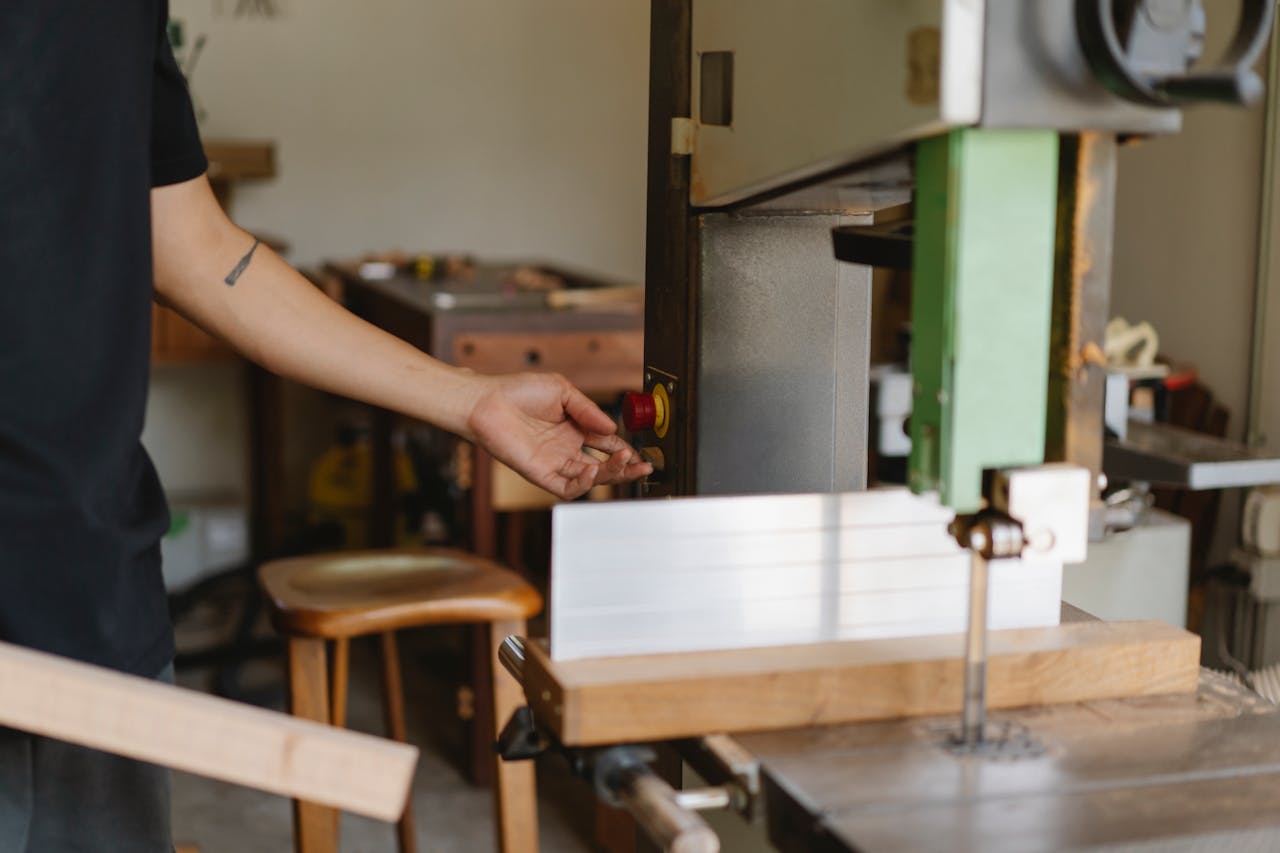
How to Use a Band Saw Safely: Practical Habits That Make a Big Difference
A band saw is one of those tools that quickly becomes a favorite. It cuts smoothly, handles curves beautifully, and feels more controlled than many other saws. Because of that, it’s easy to relax around it.
And that’s usually when mistakes happen.
The band saw may look calm, but it still runs a fast, sharp blade that doesn’t forgive poor setup or distracted hands. The good news is that safe operation isn’t complicated. With the right habits, we can make accurate cuts and stay in control the entire time.
Let’s walk through how we use a band saw safely in real-life home workshop situations.
Why Band Saw Safety Starts Before the Cut
Many beginners focus on what happens during the cut. In reality, most problems start before the blade even touches the material.
If the setup is wrong, the cut becomes harder to control. And harder cuts lead to rushed decisions.
So safety begins with preparation.
Step 1: Inspect the Saw
Before turning anything on, we take a quick look.
We want to check:
-
Is the blade in good condition?
-
Are there missing teeth or visible cracks?
-
Is the blade tracking properly on the wheels?
-
Does the guard move smoothly?
If something seems off, it probably is. Fixing it now is far easier than dealing with it mid-cut.

Step 2: Adjust the Blade Guard Correctly
This is one of the most important safety steps.
The guard should sit just above the material we’re cutting. Not high in the air.
Lower guard height:
-
Reduces exposed blade
-
Improves accuracy
-
Gives us more control
Running with the guard too high is a very common beginner habit—and an avoidable risk.
Step 3: Plan the Cut Before Starting
We should always know:
-
Where the cut begins
-
Where our hands will be
-
Where the offcut will go
If we’re figuring things out while the blade is moving, we’re already behind.
A few seconds of planning prevents a lot of stress.
Step 4: Position Our Hands Safely
Our hands should guide the material, not chase the blade.
Good habits include:
-
Keeping fingers to the side of the cut line
-
Never placing hands in line with the blade
-
Using push tools for narrow pieces
If our fingers feel too close, they are.

Step 5: Start the Saw and Let It Reach Full Speed
Before feeding material, we should let the blade come up to full speed.
This helps:
-
Reduce grabbing
-
Improve smoothness
-
Make the cut more predictable
Jumping in too early can create sudden movement.
Step 6: Feed the Material Slowly and Steadily
A band saw is not a race.
We want:
-
Gentle forward pressure
-
No forcing
-
No twisting
If the blade resists, it’s often because we’re pushing too fast or trying to turn too sharply.
Let the saw do the work.
Step 7: Maintain Balanced Body Position
We should stand comfortably, with:
-
Feet planted
-
Good visibility
-
No leaning or reaching
If we lose balance, we lose control. And control is everything with cutting tools.

Step 8: Never Reach Near a Moving Blade
Even if a scrap piece shifts or falls, we wait.
We should:
-
Keep hands away
-
Finish the cut
-
Turn off the saw
-
Wait for the blade to stop
Moving blades deserve patience.
Step 9: Turn Off and Wait After the Cut
Once the cut is done, we resist the urge to move quickly.
We wait until:
-
The blade fully stops
-
Everything is still
Then we clear material and prepare for the next step.
Common Mistakes We All Tend to Make
Relaxing Too Much
Because the band saw feels controlled, we may forget it’s still a cutting machine.
Forcing Tight Curves
Blades have limits. When we push beyond them, control disappears.
Working Too Close With Small Pieces
Small parts often bring fingers dangerously near the blade. Push tools are safer.
Practical Safety Tips We Can Use Immediately
-
Lower the guard close to the material
-
Plan hand positions before cutting
-
Keep fingers out of the blade path
-
Feed material slowly
-
Stay balanced
-
Stop the saw before adjustments
-
Be patient after finishing the cut
These simple steps dramatically reduce risk.
Confidence Comes From Preparation
The more consistent we are with setup and positioning, the calmer the band saw feels. Cuts become predictable. Movements become smoother.
Safety isn’t about hesitation.
It’s about readiness.
Conclusion
Quick Summary: How to Use a Band Saw Safely…
-
Inspect the saw before use
-
Set the blade guard low
-
Plan the cut
-
Keep hands away from the blade path
-
Let the blade reach full speed
-
Feed material gently
-
Maintain stable posture
-
Never reach near moving blades
-
Wait for a full stop before clearing
When we follow these habits, the band saw becomes not only powerful, but comfortable to use. And that’s exactly how good woodworking should feel.