Can You Use an Impact Driver as a Drill? What Works and What Doesn’t
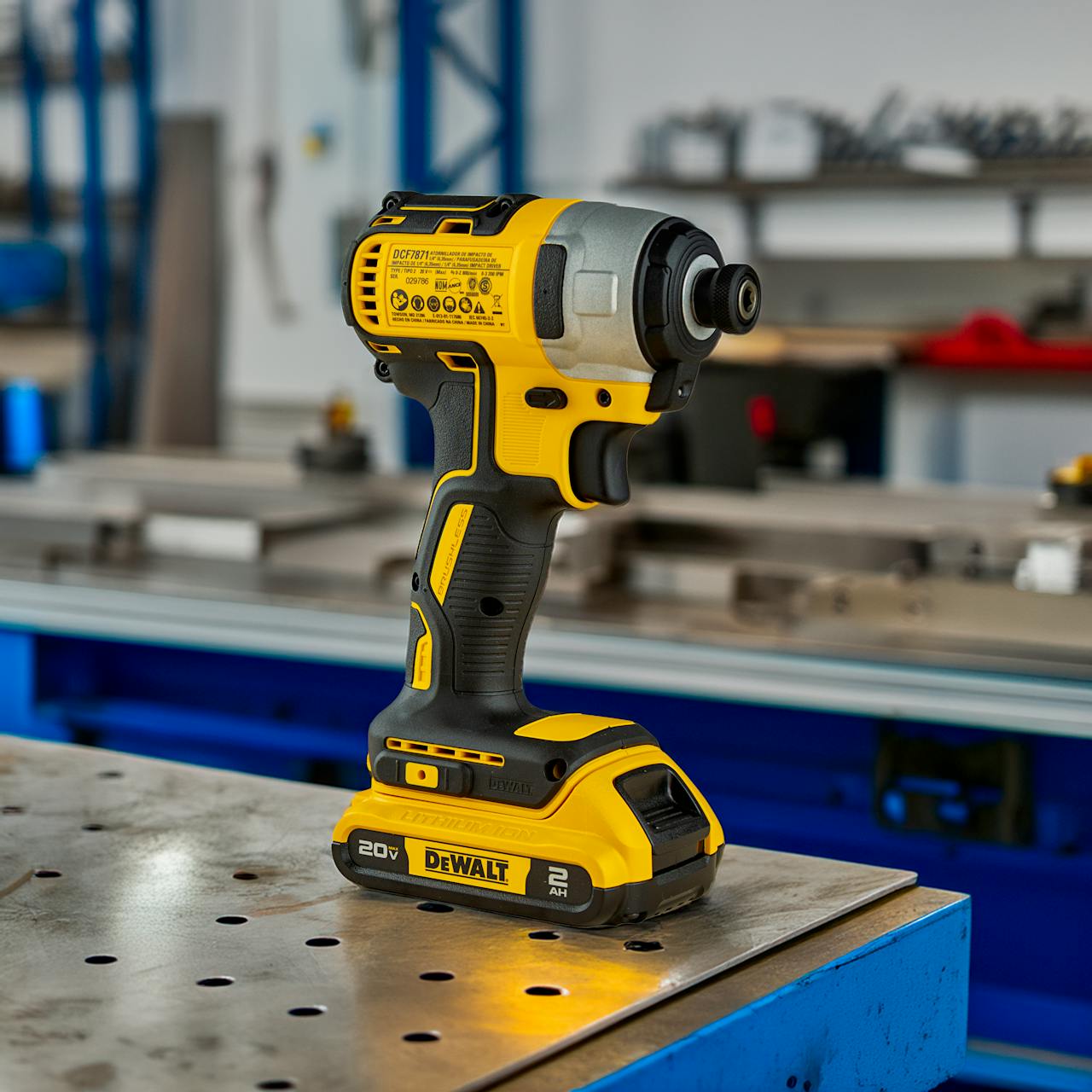
If we own an impact driver, this question shows up sooner or later.
We’re standing there, ready to make a hole, and we wonder:
Do we really need a drill, or can we just use the impact driver?
It’s a fair question. Impact drivers are powerful, compact, and already in our hands. Switching tools can feel unnecessary. Sometimes it works out fine. Other times… not so much.
Let’s clear up when an impact driver can replace a drill, when it can’t, and how to avoid the most common mistakes.
The Short Answer
Yes, we can use an impact driver to drill holes.
But.
It depends heavily on:
-
The material
-
The size of the hole
-
The type of drill bit
-
The level of precision we need
An impact driver is not a perfect substitute for a drill. It’s more like a backup option for certain situations.
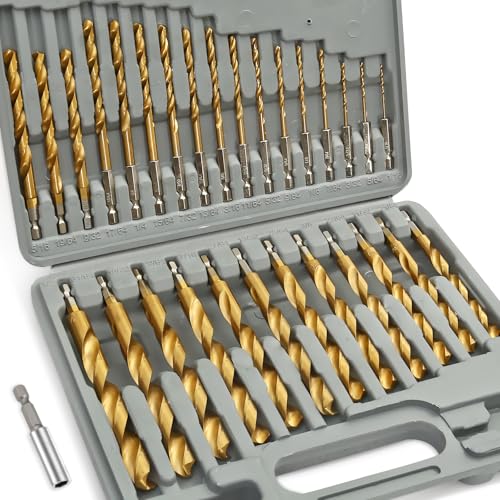
- HSS Titanium Coating - Classic HSS construction with titanium coating for capability and durability. The cutting edge is hardened and honed for sharpness, chatter-free design with staggered cutting teeth ensure the precise countersinking and hole smooth clean.
- Flutes Form - 2 flutes form helps clear chips and debris away from the bit, decreasing friction and heat for a faster, cooler drilling process.
- Quick Change - 1/4 inch hex shank fits into all power tools more easily and securely, specially for locking into quick change chuck. We also offer a quick-change adapter to better quick change.
What Makes an Impact Driver Different From a Drill?
This is always the first decision. Different materials require different bit designs.
Before deciding, we need to understand how these tools behave.
A drill:
-
Spins smoothly
-
Is designed for controlled, consistent rotation
-
Usually has adjustable clutch settings
An impact driver:
-
Spins and adds bursts of rotational force
-
Is optimized for driving screws and bolts
-
Delivers more torque but less finesse
Power vs control.
That’s the trade-off.
When Using an Impact Driver as a Drill Works Fine
There are situations where an impact driver performs surprisingly well.
Small Holes in Wood
For light-duty drilling in softwood, it usually works without drama.
Good examples:
-
Pilot holes
-
Small hardware
-
Basic DIY tasks
If precision isn’t critical, we’re usually fine.
Rough Construction Work
If we’re drilling holes where appearance doesn’t matter much, the extra torque isn’t a problem.

When It’s Not a Great Idea
Here’s where things get tricky.
Larger Holes
Impact action can:
-
Make the bit wander
-
Create rough edges
-
Reduce accuracy
Metal
Metal usually prefers:
-
Smooth rotation
-
Steady pressure
-
Controlled speed
The hammering action of an impact driver can make the process harder.
Precision Work
If alignment matters—like hinges or hardware—the extra force can work against us.

Bit Compatibility Is Important
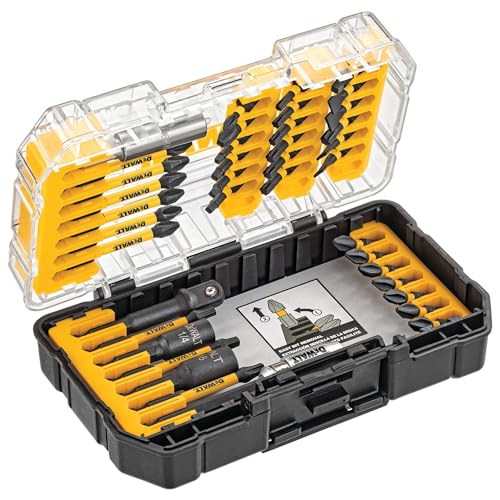
Impact drivers typically use hex-shank bits.
Regular round-shank drill bits often require an adapter. While adapters exist, they add:
-
Extra movement
-
Less stability
-
More chances for wobble
More wobble = less accurate holes.
Control vs Speed
Impact drivers are fast and powerful. That’s great for screws.
For drilling, though, too much torque can:
-
Grab suddenly
-
Pull the tool forward
-
Make it harder to stay straight
This surprises many beginners.

Common Mistakes We Make
Assuming More Power Means Better Results
It often means rougher results.
Skipping the Pilot Hole
Impact drivers benefit from guidance even more than drills.
Using Dull Bits
Dull bits plus impact force equals frustration.
Practical Tips If We Use an Impact Driver for Drilling
-
Stick to small holes
-
Use sharp bits
-
Hold the tool firmly
-
Start slowly
-
Expect less precision
-
Test on scrap material first
These steps improve success dramatically.
When It’s Worth Switching to a Drill
We should reach for a drill when:
-
Hole size is large
-
Material is hard
-
Precision matters
-
We want a clean finish
Drills are built for this job. They make it easier.
Why People Love Using Impact Drivers Anyway
Because they’re convenient.
They’re often:
-
Already in hand
-
Lightweight
-
Powerful
-
Great at driving fasteners
And sometimes that convenience wins.
The Confidence Rule
If we feel unsure whether the impact driver will behave predictably, switching to a drill is usually the smarter move.
Comfort leads to control.
Control leads to better results.
Conclusion
Can You Use an Impact Driver as a Drill?
-
Yes, for small and simple holes
-
Works best in wood
-
Not ideal for metal or precision tasks
-
Hex-shank bits are preferred
-
Expect less control
-
Use sharp bits and start slowly
-
Switch to a drill when accuracy matters
An impact driver can absolutely drill—but knowing its limits helps us avoid frustration and get better outcomes in our projects.