
Best Sanding Blocks for DIY Projects and Home Repairs
If you’ve ever tried sanding a surface by hand and ended up with uneven results, sore fingers, or sandpaper that just wouldn’t stay put, you’re not alone. Sanding blocks seem simple, but choosing the right one can make a noticeable difference in how smooth, clean, and controlled your work feels.
Whether you’re touching up furniture, prepping walls for paint, or smoothing rough edges on a small woodworking project, the best sanding blocks help you work more evenly and with less effort. They give your hand a stable grip, apply pressure more consistently, and make it easier to control the sanding surface—especially on flat areas, edges, and corners.
This guide is for homeowners, DIY beginners, and hobbyists who want better results without overthinking tools. You don’t need professional gear or complicated systems. You just need a sanding block that fits your project, feels comfortable to use, and works well with the sandpaper you already have. Below, we’ll walk through what actually matters when choosing one, then look at specific options based strictly on their official product descriptions.
Buying Guide: What to Look for in the Best Sanding Blocks
Not all sanding blocks are the same, even if they look similar at first glance. Before choosing one, it helps to think about how and where you’ll actually use it.
Grip and comfort matter more than most people expect. A sanding block should sit naturally in your hand and feel stable as you move it back and forth. If the grip feels awkward or slippery, you’ll tire out faster and lose control, especially during longer sanding sessions.
Compatibility with sandpaper is another key point. Some sanding blocks are designed for standard sheets, while others work with specific sizes or attachment methods. A good fit means less slipping, fewer wrinkles, and more even sanding across the surface.
Flexibility vs. firmness also plays a role. Firmer blocks are better for flat surfaces where you want consistent pressure. More flexible designs can adapt to slight curves or uneven areas. Neither is “better” overall—it depends on the task.
Finally, consider where you’ll use it most. Walls, furniture, trim, and small craft projects all place different demands on a sanding block. The best sanding blocks are usually the ones that quietly do their job without getting in the way or making the work harder than it needs to be.

The Top 5 Best Sanding Blocks in 2026

This LIBRATON kit is less about a single sanding block and more about having a complete hand-sanding setup ready to go in one box. Along with the sanding block itself, you get a wide range of sandpaper sheets and sanding sponges, which makes it easier to handle different tasks without switching tools or running back to the store.
The included sanding block acts as a holder for the pre-cut sandpaper sheets, helping keep the paper flat and easier to control during one-handed use. That’s especially helpful for beginners or casual DIYers who want more consistent pressure when sanding wood, metal, or painted surfaces. The kit supports both wet and dry sanding, which adds flexibility if you’re working on paint finishing, furniture touch-ups, or small refinishing jobs.
The assortment covers rough to fine grits, so it’s suited for everything from removing scuffs and abrasions to smoothing surfaces before a final finish. The sanding sponges add another option for areas where a flat sanding block might feel too rigid. Grit numbers are printed on the back of the sheets, which helps avoid guessing mid-project.
Who it’s best for:
This set is a good fit for homeowners and hobbyists who want variety and convenience in one package rather than building a sanding setup piece by piece.
Notable features:

This BOSHCRAFT set focuses on sanding sponges rather than a traditional hard sanding block, which makes it a flexible option for a wide range of hand-sanding tasks. The pack includes multiple grit levels from coarse to superfine, so you can move through different stages of sanding without changing tools or setups.
Because these blocks are sponge-based, they naturally adapt to flat surfaces, edges, and slightly contoured areas. That flexibility is especially useful when working on furniture, drywall repairs, or detailed spots where a rigid block might feel awkward. The high-density sponge material is designed to stay elastic and resist tearing, even when used repeatedly or with water.
These sanding blocks can be used dry or wet. When used wet, they help reduce dust buildup and allow for smoother polishing, which is helpful for paint prep, primer smoothing, or light finishing work. The grits are easy to identify by touch and labeling, making it simpler to grab the right block mid-project.
Who it’s best for:
This set is well suited for DIYers and homeowners who handle a variety of small to medium projects and want reusable sanding blocks that are easy to grip and control.
Notable features:


This Amazon Basics sanding block is a straightforward, no-frills hand sanding tool designed for control and comfort. It’s a classic rubber sanding block that focuses on doing one job well: holding sandpaper securely while giving your hand a stable, easy-to-manage grip.
The solid rubber construction fits naturally in the hand, which helps maintain even pressure across flat surfaces. It’s designed to work with standard quarter sheets of sandpaper, making it easy to use with sandpaper you may already have on hand. Once attached, the paper stays in place, reducing slipping and bunching during use.
This block can be used on both wet and dry surfaces, indoors or outdoors, which adds flexibility for different sanding situations—whether you’re smoothing wood, prepping surfaces, or doing light finishing work. The material blend is built for durability while still allowing a bit of flexibility, so it doesn’t feel overly rigid during longer sanding sessions.
Who it’s best for:
This sanding block is a good choice for DIYers and homeowners who want a simple, reusable sanding block that’s easy to use, easy to store, and compatible with common sandpaper sizes.
Notable features:
-
Material – Solid rubber construction
-
Grip design – Comfortable hand fit
-
Sandpaper size – 1/4 sheet compatible
-
Usage type – Wet and dry sanding
-
Build composition – Polypropylene and TPR
-
Form factor – Compact hand block

The Milescraft Sand-It sanding block is designed for situations where a standard flat sanding block just isn’t enough. Its main strength is versatility. Instead of locking you into one sanding shape, this block offers multiple profiles in a single, compact tool.
It features four different sanding surfaces: flat, convex, concave, and a tight edge. This makes it easier to sand curved pieces, rounded edges, or narrow areas without switching tools. If you work on small woodworking projects, trim, furniture details, or anything with mixed shapes, this kind of flexibility can save time and frustration.
The block accepts any quarter sheet of sandpaper, so you’re not tied to a specific brand or grit. Switching between grits is quick thanks to the snap-style paper lock, which helps keep the sandpaper in place while still being easy to change. A 150-grit sandpaper sheet is included, so it’s ready to use right away.
Who it’s best for:
This sanding block is best suited for DIYers and hobbyists who often deal with curves, edges, and tight spaces, and want one hand tool that can adapt to different sanding needs without overcomplicating the process.
Notable features:
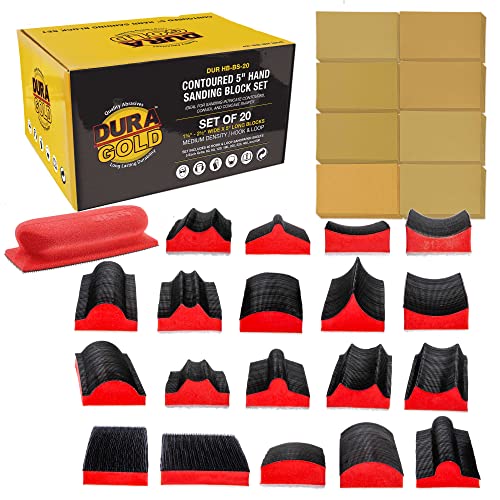
This Dura-Gold set is built around shape variety and adaptability, making it very different from basic sanding blocks. Instead of one or two profiles, you get a full collection of contoured blocks designed to handle convex, concave, and intricate surface shapes that are usually frustrating to sand by hand.
The blocks are made from medium-density polyurethane foam, which balances firmness with flexibility. This allows them to follow curves and molding details while still applying even pressure. All blocks are 5 inches long, with varying widths and profiles, giving you options for everything from furniture edges and moldings to irregular or decorative surfaces.
A key part of this system is the hook & loop attachment. The included base handle quickly connects to any of the blocks, and the sandpaper sheets attach securely to the block surface. The kit includes 40 sanding sheets in a wide grit range, making it easy to move from aggressive material removal to fine finishing without switching sanding systems.
Who it’s best for:
This set is best suited for DIYers and advanced hobbyists who regularly work with detailed shapes, trim, furniture, or mixed materials, and want one organized system rather than improvising with flat blocks and folded sandpaper.
Notable features:
Quick Comparison: Which Sanding Block Makes Sense for You?
If you’re just getting started with hand sanding, simplicity usually matters more than versatility. For beginners and general home use, a straightforward option like the Amazon Basics rubber sanding block is easy to understand and works with standard quarter sheets. It’s predictable, comfortable to hold, and doesn’t require learning a system. The LIBRATON kit is also beginner-friendly if you like having everything in one place, especially when you’re not yet sure which grit you’ll need for a project.
If your projects involve curves, edges, or mixed surface shapes, flexibility becomes more important. The Milescraft Sand-It stands out here thanks to its four built-in profiles. It’s a good middle ground—more adaptable than a flat block, but still compact and easy to use. The BOSHCRAFT sanding sponges also work well for contoured and uneven surfaces, especially when you want something washable and reusable.
For specialized or detailed work, the Dura-Gold contoured block set clearly offers the most options. With multiple interchangeable shapes and a wide grit range, it’s designed for situations where flat sanding just doesn’t work well. It’s more involved, but also more capable when precision matters.
| Product | Type | Grit Range | Best For | Surfaces | Wet/Dry |
|---|---|---|---|---|---|
| LIBRATON Sandpaper Kit | Block + kit | 40–600 | All-around DIY | Wood, metal, paint | Yes |
| BOSHCRAFT Sanding Sponges | Sponge blocks | 60–220 | Curves & contours | Wood, drywall | Yes |
| Amazon Basics Rubber Block | Rubber block | Any ¼ sheet | Basic sanding | Wood, general use | Yes |
| Milescraft Sand-It | Multi-profile block | Any ¼ sheet | Tight spaces | Wood, trim | Not specified |
| Dura-Gold Contoured Set | Profile system | 60–600 | Detailed shapes | Wood, auto, trim | Not specified |
Conclusion
The best sanding blocks aren’t about having the most pieces or the highest grit numbers. They’re about matching the tool to the kind of work you actually do. Flat surfaces, light repairs, and basic prep work benefit from simple, solid sanding blocks. Curves, trim, and detailed shapes call for sponges or contoured profiles that can follow the surface.
If you value convenience, kits with mixed grits reduce guesswork. If control and consistency matter more, a single well-designed block may be all you need. Think about the surfaces you sand most often, how much control you want, and whether flexibility or simplicity fits your style better. With the right sanding block in hand, the work tends to feel smoother—and the results usually show it.
Among these options, the LIBRATON Sandpaper Assortment Kit with Sanding Block felt like the most well-rounded choice. It offers flexibility without overthinking the process.
And what will be the best sanding blocks in 2027? If you are interested in this subject subscribe us and share your opinion in a comment. Thank you!